For people already in recovery

You got sober. The life you wanted hasn't caught up yet

The crisis is behind you. You've built something steady, and you protect it. But steady turned out not to be the same as fulfilled — and nobody hands you instructions for the second part. Mindset Evolution is a 10-session course for that part: getting clear on what you actually want your life to be about, and building it one week at a time, with people doing the same.

Takes about two minutes on Skool. Card required, not charged for 7 days. Cancel in two clicks.

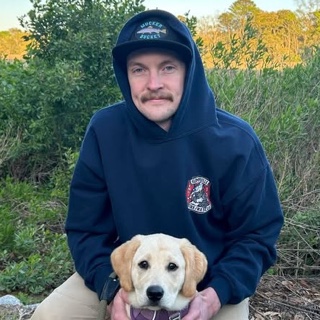
Licensed Professional Counselor8+ years in substance use treatment settingsWorks with any recovery pathway
Watch the overviewMichael Chester, MA, LPC
  1. 1

    Start free on Skool

    Two minutes. You're in the community and Session 1 opens right away.

  2. 2

    Session 1 in your first week

    Clarify what matters, make one commitment, and post it. That's the first pattern you build.

  3. 3

    One new session a week

    Ten weeks of building the pull — alongside meetings, therapy, a routine, or whatever already keeps you steady.

The part nobody prepares you for

Early recovery has a clear job. This next part doesn't.

In the beginning the assignment was obvious: don't use, and do the things that keep you from using. Brutally hard, but clear — and everyone around you could see you doing it. Years in, the assignment quietly changes to build a life, and no one hands you that one in writing.

The applause stopped

Early on, every week sober was an achievement people noticed. Now it's just Tuesday. The milestones spread further apart, the check-ins thin out, and what used to feel like progress starts to feel like maintenance — the same week, run again.

Steady is not the same as fulfilled

You can be doing everything right and still feel like you're holding a position rather than going somewhere. That isn't ingratitude and it isn't a warning sign. It's what happens when the job you trained for was stop, and the job in front of you is start.

What this course builds

A direction. Not a life you protect because you're afraid of what you'd go back to, but one so connected to what matters that it pulls you forward. The push has a shelf life. A pull is something you can strengthen for the rest of your life.

In their wordsReal clients of Michael

In their own words

Real people. Real words.

Nothing here is scripted or invented. The people in this video are real clients of Michael, describing in their own words what working with him was like. Every person you see gave written permission to be here.

“Mike has helped me immensely… I have more confidence than ever before, and I have been able to change my outlook on life thanks to him.”
Jack · a client of Michael’s

Experiences vary. Mindset Evolution is a fulfillment-based course, not treatment, and results are not guaranteed.

The second job

You already know how to stay sober. This is about what you're staying sober for.

Whatever keeps you steady — meetings, a sponsor, therapy, medication, your own hard-won routine — keep doing it. Nothing here replaces any of it, and this course doesn't compete with any pathway. It does the job most of them don't have room for: deciding what you want your life to be about, and then actually building it.

The research points the same way, and it keeps pointing there long after year one. Quality of life and recovery capital — meaning, purpose, supports, connection — keep building across years of recovery, and they track with staying well. Put plainly: one of the most protective things you can have is a life you'd hate to lose. That doesn't arrive on its own. It gets built. (Laudet, 2007; Laudet & White, 2008)

Values
Get clear on who you want to be now — not the version of you that was surviving, the one you're building.
Burning the boats
Act on moments of clarity while you have them, instead of filing them away for a someday that keeps moving.
Choice points
The moment between what shows up inside you and what you do next. Learn towards moves and away moves, and what it means to be hooked.
Willingness
Have the restlessness, the doubt, the fear of wanting more — and still choose the direction. Trade the discomfort scale for the willingness scale.
Unhooking
Fact vs. story. Create space from the thoughts that drive avoidance and disengagement, including shame.
Patterns
Repetition builds automatic patterns — for you or against you. Choose which ones to strengthen.

What's inside

Ten sessions. One a week. Built to be worked, not watched.

Each session pairs a guided video with a Session Guide that has you pause and apply it to your own life. Every session ends the same way: a Take This With You summary, one weekly commitment — what I'll do, when, what might get in the way, what I'll do if it does — and a prompt for the community.

  1. 01

    Clarify, Commit, Change

    What truly matters, burn the boats on the excuses and safety nets that pull you backwards, and make a concrete commitment.

    Preview the Session 1 Guide (PDF)
  2. 02

    Choose, Plan, and Act

    Values become goals: a vision of life 6–12 months out, SMART goals tied to values, and your first weekly action plan with obstacles named.

  3. 03

    Choice Points

    The moment between what shows up and what you do next. Towards and away moves, and what it means to be hooked — and to unhook.

  4. 04

    Willingness

    The passengers on the bus: thoughts and feelings that try to steer. Name yours, and trade the discomfort scale for the willingness scale.

  5. 05

    Unhooking from Unhelpful Thoughts

    Fact vs. story. The noticing technique that creates space — and the new story your actions will build.

  6. 06

    Making Room for Difficult Emotions

    The brain's spotlight on danger, grounding through the five senses, and making room — having a feeling without letting it choose the direction.

  7. 07

    Opposite Action

    The wall between you and the life you want isn't made of danger — it's made of discomfort. Notice what the brain wants and choose the opposite, in small repeatable moments first.

  8. 08

    Rewiring Through Patterns

    How repetition builds automatic patterns — for or against you. Check in on your values and goals and choose one pattern to strengthen.

  9. 09

    Staying in Motion

    Build your Ongoing Growth Plan: the strategies you'll keep using — professional support, community, daily practices — with a person to share it with.

  10. 10

    Continuing to Move TOWARDS What Matters

    Biggest takeaways, the finalized growth plan, and the TOWARDS framework you can return to at any scale — a whole new direction or a single hard moment.

TOWARDS. Think about what matters. Observe your thoughts and feelings. Work with what shows up. Act. Repeat. Do it again. Strengthen your supports, surroundings, and systems. Whenever you feel stuck, overwhelmed, or unsure what to do next, TOWARDS is the way back.

The full trailer · 2:34What the course looks like from the inside
Start my free week7-day free trial · full access to Session 1 and the community

The community

The people around you know your story. Do they know what you're building?

Plenty of people in long-term recovery have a support network that's excellent at one conversation — how you're holding up — and has no real place for the other one: what you're trying to become. This is a room for that second conversation, with people who are having it too.

What happens inside

Weekly commitment
Every Session Guide ends with a discussion prompt and one action for the week. You post it. People notice whether you showed up.
Michael in the room
Michael is an active participant — reading, responding, and holding live meetings. Not a course with a comment section.
Live Q&A
Regular live sessions to work through what's coming up as you apply the skills in real life. Camera off is fine.
Challenges & workshops
Short, practical challenges that turn a concept from a session into something you actually try, alongside people at every stage.
After Session 10
The course ends. The community doesn't. Continued access is $19.99/month — for the Q&A, the challenges, new material, and the people who know what you're working on.

Why this approach fits

Built on an approach with decades of research behind it.

The course is grounded in Acceptance and Commitment Therapy (ACT), one of the most extensively researched psychotherapy models of the past two decades. Here's why it fits this stage of recovery in particular.

Sobriety removes the substance. Discomfort stays.

Use often functioned as a fast, reliable way to get away from difficult thoughts and feelings. Take the substance out and the impulse to escape doesn't automatically leave with it — it tends to find quieter outlets: overwork, distraction, keeping life small enough that nothing can go wrong. ACT works on that directly, rather than on the substance.

It replaces a fading push with a durable pull.

Consequence-driven motivation fades as the pain gets further away — and by now it is a long way away. Values don't fade. They're inexhaustible, available in any moment, and stronger with practice. And because ACT doesn't compete with any recovery pathway, it works with whatever you already do rather than asking you to swap it out.

Tested in recovery settings.

A meta-analysis of 10 randomized trials found a significant effect favouring ACT on substance use outcomes against active treatments. In a randomized trial inside a 28-day residential program, a brief ACT group targeting shame improved continuing-treatment attendance and reduced use at follow-up. (Lee et al., 2015; Luoma et al., 2012)

The format works outside the therapy room.

A meta-analysis devoted to self-help ACT found significant effects on depression, anxiety, and the core skill this course teaches — with outcomes improving as guidance increases. That's why this is a guided course with a Session Guide and a live community, not a video library. (French et al., 2017; Han & Kim, 2022)

These findings are about ACT and about recovery in general. Mindset Evolution is built on them; it is not itself a clinical trial, and it makes no promise about your outcome. It's a course, worked one week at a time.

Free to start

Not ready to join? Start with ten minutes.

What Actually Matters is a two-page check-in pulled from Session 1. It asks the question this whole course is built on — what do you want to be about? — and turns the answer into one small move you can make this week. Free — just an email address.

Step 1 · Circle five valuesFamily, growth, health, courage, discipline, connection… the five that feel true, not the five that sound good
Step 2 · Three honest questionsWhat actually matters to me? What kind of person do I want to be, no matter what life throws at me? What do I want to be about?
Step 3 · One small move this weekA five-minute walk, one honest sentence, one text you've been putting off — then rate how sure you are you'll do it, 0 to 10. Under a 7, make it smaller.
Michael Chester, MA, LPC, Licensed Professional Counselor

Your guide

Michael Chester, MA, LPC

Michael is a Licensed Professional Counselor and the founder of Everest Therapy Solutions, a values-driven group practice in Mount Pleasant, South Carolina, specializing in evidence-based care for substance use, anxiety, and depression.

He has worked in residential addiction treatment for over three and a half years, with clinical experience spanning the full continuum of care — residential, partial hospitalization, intensive outpatient, outpatient, and individual therapy. That range shaped Mindset Evolution: it was built by a clinician who has watched what happens at every level of care, including the moment structured support ends.

He holds a Master's in Clinical Counseling from The Citadel and a BA in Psychology, with honors, from the College of Charleston. His work draws primarily on Acceptance and Commitment Therapy, alongside Motivational Interviewing and Solution-Focused approaches — helping people move beyond symptom management towards lives they want to live.

Licensed Professional Counselor · 8+ years in substance use treatment settings — OP, IOP, PHP, and RTC · Founder, Everest Therapy Solutions · Mount Pleasant, SC

Join the course

Try the first week free. Stay if it's helping.

Your trial gives you full access to Session 1, its Session Guide, and the community. If it's not the right fit, cancel before the trial ends and you won't be charged. Finish the 10 sessions over three months, then stay connected for less than the price of a lunch.

  • All 10 video sessions, released weekly
  • Downloadable Session Guides and worksheets
  • Private community: weekly commitments, live Q&A, challenges, and Michael reading and responding
  • Your Ongoing Growth Plan and the TOWARDS framework to take with you
Founding member rate
$100 $50/month

For your first 3 months — the full 10-session course, for about what a gym membership costs. After that, ongoing access to the community, Q&A, and everything new is $19.99/month.

$150 for the whole 10-session course — less than one session with a sought-after recovery coach, under $1.70 a day. The standard rate is $100/month; founding members keep $50 for as long as they stay.

First 7 days free.

Start my free week

Your card won't be charged today. Cancel in two clicks from your Skool account. Secure checkout on Skool.

Created and led by Michael Chester, MA, LPC — Licensed Professional Counselor, South Carolina.

Prefer to talk to a person first? Call or text Everest Therapy Solutions at 843-256-3322 and ask about Mindset Evolution.

Questions

Frequently asked

Is this treatment?

No, and it's designed that way on purpose. Mindset Evolution is not a level of care, not treatment, and not a substitute for professional support. It doesn't address substance use directly and it isn't a recovery program. It's a course about building a life in a direction you choose — which happens to be the thing a lot of people find themselves needing once the crisis is well behind them.

I've been sober a while. Is this going to be too basic?

It isn't a recovery curriculum, so it won't retread ground you covered years ago. There's no recovery-management curriculum, no disease-model teaching, no first-90-days material. It starts at a question most people never get a structured shot at — what do you want your life to be about — and spends ten sessions on the machinery of actually moving there. Session 1 is free; that's the honest way to find out whether it lands.

Will this conflict with my program?

It shouldn't. The course doesn't take a position on how anyone gets or stays sober, doesn't ask you to adopt a framework, and doesn't reference any particular pathway. Members are in twelve-step programs, in therapy, on medication, in other communities, or working their own routine — the material sits on top of all of it. If something in a session ever cuts against what your sponsor or clinician tells you, listen to them.

Do I have to share my story?

No. The community is private — members only, no algorithm, no advertising. You choose what you share. Plenty of people start by watching and post when they're ready. Live Q&A with the camera off is fine.

What if I have a recurrence of use?

Reach your people first — whoever that is for you: a sponsor, a therapist, a doctor, a friend who's picked up the phone before. This course is not the right tool for that moment and won't pretend to be. Then come back when you're ready. Connection changes what happens next, and a room that knows what you're building is a reason to reach out sooner rather than start over alone.

How much time does it take?

Plan on roughly an hour for each session — the video and the Session Guide — plus small practice actions during the week. One session a week is the rhythm; sessions stay available if life gets in the way.

What happens after Session 10?

You'll finish with an Ongoing Growth Plan, the TOWARDS framework, and a complete set of reusable guides. Your membership drops to $19.99/month for continued access to the community, live Q&A, and new material. Stay as long as it's useful; cancel whenever it isn't.

Can I cancel?

Yes. Cancel any time from your Skool account in two clicks. If you cancel during the 7-day trial, you won't be charged.

An important note. Mindset Evolution is a complementary, fulfillment-based course. It is not a level of care, not treatment, and not a substitute for aftercare or professional support. It is not suitable for people in acute crisis, with active safety concerns, or with untreated psychosis. Enrollment is always your choice.

If you're in crisis or thinking about harming yourself, call or text 988 (Suicide & Crisis Lifeline). For treatment referrals, SAMHSA's National Helpline is free and confidential, 24/7: 1-800-662-4357. Everest Therapy Solutions can also help you find the right support.

7 days free · then $50/mo · cancel anytimeStart my free week